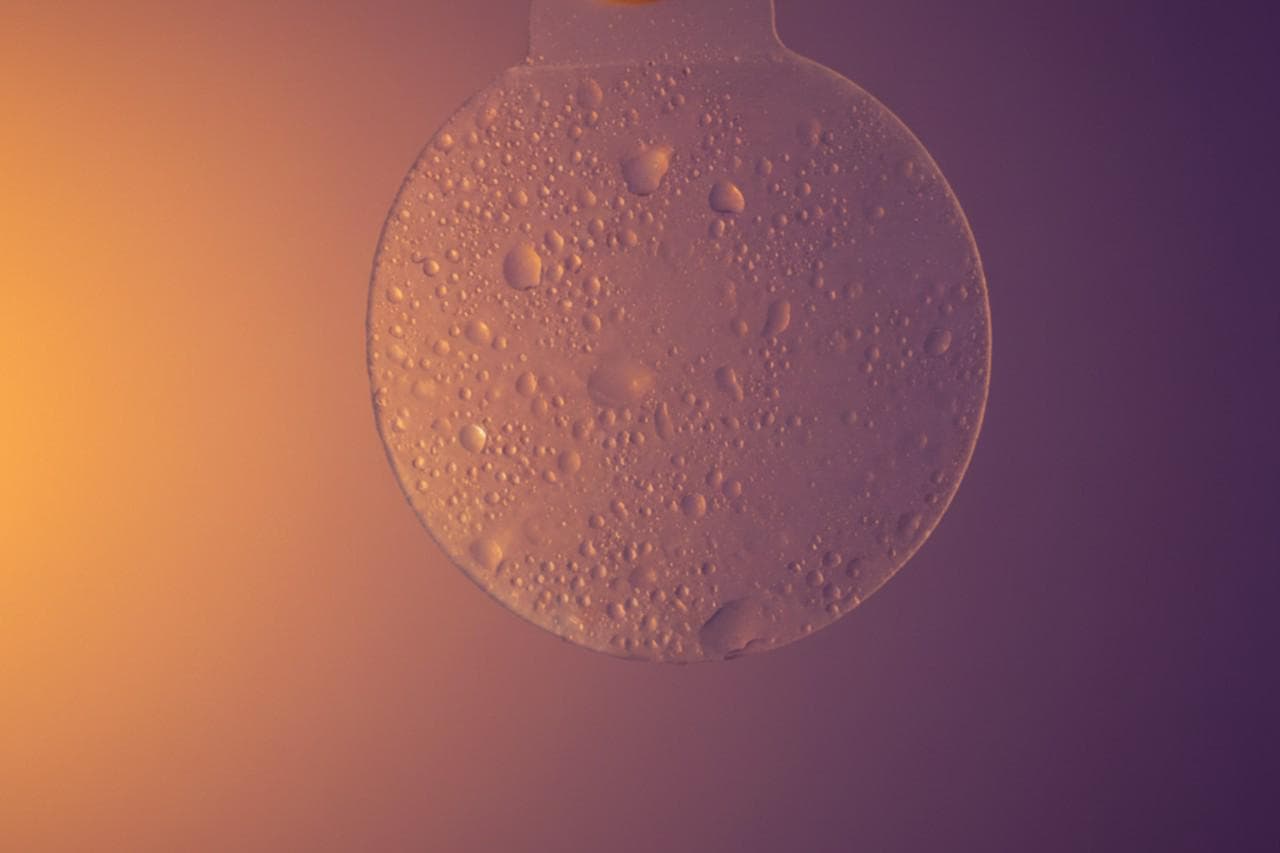
Your tears are more complex than you think. Understanding the three-layer structure of your tear film explains why so many eye comfort products miss the mark.
We tend to think of tears as simple saltwater, but they're actually a sophisticated three-layer system. Each layer serves a specific purpose, and when any one layer is compromised, you feel it.
The Three Layers of Your Tear Film
Layer 1: The Mucin Layer (Inner)
The innermost layer sits directly on your cornea. It's produced by goblet cells in the conjunctiva and serves a critical function: it makes the corneal surface hydrophilic (water-attracting). Without this mucin layer, tears would bead up and roll off your eye like water on a waxed car.
When it goes wrong: Conditions like vitamin A deficiency or chemical burns can damage goblet cells, preventing tears from spreading evenly across the eye.
Layer 2: The Aqueous Layer (Middle)
This is the watery layer most people think of when they think of tears. Produced by the lacrimal glands above each eye, it makes up about 90% of the tear film's thickness. It contains:
- Water for hydration
- Electrolytes for osmotic balance
- Proteins and enzymes that fight infection
- Growth factors that help the cornea repair itself
- Antibodies for immune defense
When it goes wrong: Aqueous-deficient dry eye occurs when the lacrimal glands don't produce enough of this layer. This is what most standard artificial tears try to replace.
Layer 3: The Lipid Layer (Outer)
The outermost layer is a thin film of oil produced by the meibomian glands in your eyelids. Despite being incredibly thin (about 100 nanometers), this layer is crucial:
- Prevents evaporation of the aqueous layer
- Maintains a smooth optical surface for clear vision
- Prevents tears from spilling over the eyelid margin
When it goes wrong: Meibomian gland dysfunction (MGD) is the most common cause of dry eye, responsible for up to 86% of cases. When the oil layer is deficient, tears evaporate too quickly regardless of how much aqueous fluid your eyes produce.
Why This Matters for Treatment
Understanding the three layers explains why many people find standard eye drops unsatisfying. If your problem is a deficient oil layer (as it is for most dry eye sufferers), adding more water-based drops provides only temporary relief because the water evaporates quickly without the oil seal.
Effective dry eye management addresses the specific layer that's compromised:
- Oil layer problems: Warm compresses, lid massage, omega-3 supplements, overnight eye patches that maintain a warm, humid environment
- Aqueous layer problems: Artificial tears, punctal plugs (to prevent tear drainage), prescription drops like cyclosporine
- Mucin layer problems: Less common, usually requires medical treatment for the underlying cause
The Three Types of Tears
Beyond the three layers, your eyes also produce three distinct types of tears:
Basal Tears
The constant, baseline tears that keep your eyes lubricated 24/7. You produce about 1 microliter per minute — enough to coat your eyes but not enough to notice.
Reflex Tears
Triggered by irritants: onions, wind, smoke, bright light. These are produced in larger volumes to flush out threats. They're mostly water, which is why crying from an onion doesn't relieve dry eye.
Emotional Tears
Unique to humans. Emotional tears contain stress hormones and natural painkillers (leucine enkephalin). This is likely why crying can feel cathartic — you're literally flushing stress chemicals out of your body.
Protecting Your Tear System
Your tear film works best when all three layers are healthy and your glands are functioning properly. Overnight is a critical period because tear production drops during sleep while environmental factors (dry air, fans, incomplete lid closure) continue to challenge your tear film. Protecting your eyes during sleep — whether through humidity control, eye patches, or both — gives your tear system the best chance to recover and start each day balanced.